There is a lot being said about AI right now. Some of it is useful. Some of it is noise. A lot of it is focused on small wins, helping people write faster emails, summarise documents, tidy presentations, or complete day to day tasks a little more quickly. Which is fine, helpful, even, although that's not where I think the real value is. Its somewhere much more important.
Most businesses do not have an AI problem. They have a visibility problem.
They are surrounded by data, reports, systems, updates, workflows, and activity, yet still too often forced to manage by hindsight. Leaders know more information exists. They know the business is producing signals all the time. They know there are patterns, early warnings and buried insights sitting somewhere underneath the surface. The problem is getting to them in a way that is practical, timely, and useful enough to change an outcome.
This has been the real challenge for years... if not a decade.
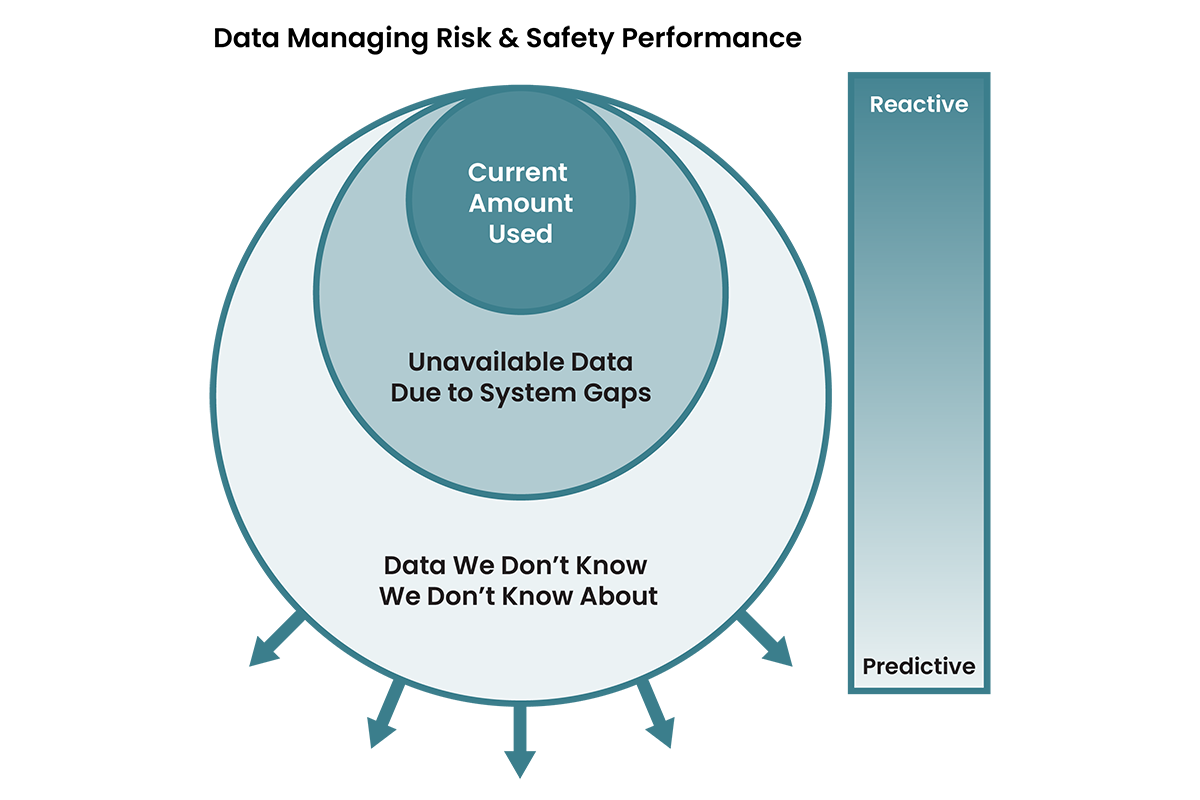
The goal has been to find the tools that help leaders get to the insight they need to manage the business in a way they struggle to today. Not because people are not trying. Not because teams do not care. But because the effort required to connect the dots across a modern business has been too high, and the data analytics capability needed to close that gap has always been scarce.
That is why this moment matters. AI is not interesting because it is new. It's interesting because it may finally help close a very real and very old gap.
The problem has never been just data.
For a long time, businesses have been told that more data is the answer. Collect more. Measure more. Report more. Digitise more. And yet, in many businesses, leaders still do not feel genuinely ahead of the game.
They are still looking backwards too often. Still relying on lagging indicators. Still finding out about drift, breakdown, or emerging issues later than they would like. Still asking teams to pull reports together manually. Still depending on a small number of people who know how to interrogate systems, shape data, and find meaning in it.
That is not a criticism of the people. It is just the reality of the challenge.
Operational businesses are complex. Data sits across processes, functions, teams, records, inspections, incidents, controls, actions, contractors, competencies, work orders, assurance tasks, and countless other moving parts. Most organisations already have more data than they can effectively use. What they do not have is enough usable visibility.
That distinction matters. Because if you misunderstand the problem, you point AI at the wrong things.
Where many businesses are aiming too low.
A lot of current AI adoption is sitting at the edge of work, not the centre of value. It is helping individuals do simple tasks faster. It creates convenience. It saves some time. It can lift confidence for people who are not naturally strong writers or who want a faster starting point.
But deep down, most leaders already know that is not the main game.
The real opportunity is not to make the small stuff a bit quicker.
The real opportunity is to use AI to help the business see more clearly.
See what is connected. See what is changing. See what is building. See where the warning signs are. See where effort is being wasted. See where risk is emerging. See where action is needed earlier.
That is a very different ambition. And in my view, it is the one that matters.
What AI can do that humans struggle to do.
This is where I think leaders need a clearer frame.
Humans are good at many things. Good leaders bring judgement, context, instinct, communication, trade-off thinking, care, and accountability. They know when something does not feel right. They know that no decision happens in a vacuum. They understand consequence in a way no system ever truly will.
But there are things humans genuinely struggle to do, especially at scale.
Humans are not good at scanning huge volumes of fragmented information across time, systems, workflows, locations, and teams fast enough to consistently find what matters early. They are not good at manually joining up weak signals across disconnected operational activity while also trying to run the business. They are not good at spotting every buried pattern across thousands of records, updates, exceptions, and interactions.
That is not failure. That is just reality. This is where AI becomes valuable.
AI can help scan more than a person ever could. It can help connect information that would otherwise stay separate. It can surface patterns, anomalies, repeated themes, and emerging signals that humans would struggle to find reliably on their own. It can reduce the time between a question being asked and useful insight being found.
That is the real opportunity. Not that AI acts like a person. That it helps with the things people are not built to do well across scale and complexity.
What AI opens up for people to do better.
This is the part that matters just as much.
When AI helps close the visibility gap, it does not reduce the importance of people. It increases it. Because once the business can see more clearly, people can spend more time doing the work that really matters.
Setting direction. Making judgments. Challenging assumptions. Choosing what matters most. Making trade-offs. Intervening earlier. Leading conversations. Building understanding. Driving action. Protecting people. Protecting the business.
AI does not own accountability. AI does not define acceptable risk. AI does not build trust. AI does not coach a leader through a difficult operational decision. AI does not create alignment when a business needs to change.
People do that. So the goal is not replacement. The goal is a more capable way of working.
A way of working where people are better informed, less trapped in manual analysis, less dependent on scarce specialist capability, and more able to spend their time leading, deciding, and acting.
That should not feel threatening.
At its best, this creates a powerful new way of working. One that helps protect people from harm, helps protect businesses from unnecessary loss, and helps leaders respond with more confidence and less delay.
Where technology fits.
There is one more piece that matters here.
AI cannot create meaningful value on its own if the underlying business environment is fragmented, inconsistent, or disconnected from the real flow of work.
This is where technology plays a critical role.
The job of technology is to help the business do what it often struggles to do consistently on its own. Capture the right information. Structure it properly. Connect related activity. Preserve context. Maintain ownership, timing, evidence, and traceability. Make operational reality more visible and more usable.
That matters because AI needs something real to work with.
If the underlying data is poor, disconnected, or detached from how work actually happens, AI may still produce output, but it will struggle to create dependable business value. This is why the combination matters so much.
AI helps surface and interpret signals across scale.
Technology helps create the connected, structured, governed environment those signals sit within. People use that visibility to make better decisions and take better action.
And when those three things come together properly, value accelerates.
A better way for leaders to think about AI.
If I was giving one piece of advice to a leader trying to work out how to get real value from AI, it would be this:
- Do not start by asking what tasks AI can do for your team.
- Start by asking where better visibility would materially improve how your business is led.
- Where are you still too reliant on hindsight? Where do you know useful data exists, but struggle to use it? Where are you depending too heavily on scarce analytics capability? Where would earlier visibility change a decision, reduce exposure, or prevent harm?
Those are better questions. Because they point AI towards the harder and more valuable problems in the business. And that is where the return sits.
Why this matters for the future of operational platforms.
This is also why I believe the future value of AI will increasingly sit inside the platforms where real operational work is already happening.
Not as a disconnected layer above the business. Not as a novelty feature. Not as a shiny extra. But as a core enabling capability inside environments where meaningful operational data is already being created and managed.
Where risk is being assessed. Where controls are being verified. Where inspections are being completed. Where actions are being tracked. Where incidents, hazards, competencies, contractors, obligations, and recurring assurance activity are already part of the operating rhythm of the business.
That is where AI gets context and where it can help reveal more of what the business already knows, and more of what it is currently missing.
That is also where technology platforms have an important job to do. Not just store records, but make operational reality visible enough, structured enough, and connected enough for insight to be practical.
That is the opportunity I see.
Final thought.
For years, businesses have been trying to find a better way to get from data to insight to action. The need has been there. The opportunity has been there. The challenge has been the gap in between.
The gap has been the difficulty of turning growing volumes of operational data into something leaders can actually use in time to make a difference. That is why AI matters.
Not because it is fashionable. Not because it sounds impressive. Not because it can make small tasks easier.
It matters because it may finally help close a real gap that has held many businesses back for a long time.
A gap between what the business knows and what it can actually see. A gap between what is happening and what leaders can respond to. A gap between data and better decisions. Used well, AI does not replace people. It strengthens them.
Used well, it does not create distance from the business. It helps leaders get closer to the truth of it. And used well, alongside the right technology and the right people, it opens the door to something better than efficiency alone.
Earlier insight. Better judgement. Faster action. Stronger protection for people and the business. That is where the real value is.
Lead well and be safe.
Paul
