
Configurable Workflow Software for Complex Operations
Workflows for Real-World Work.
Rapidly configure and update your workflows, governance and operational controls with our low-code platform.
Simple processes are not always simple systems.
Your business processes may appear straightforward when viewed at a high level. Reporting a hazard, completing an inspection, approving a contractor, raising a work request, issuing a permit or closing an action, the process itself often looks simple. Your challenge is when those processes need to operate reliably across a whole organisation, where people, sites, assets, contractors, approvals, evidence and governance obligations all need to work together.
To deliver meaningful business outcomes, the system behind it needs to understand much more than the information entered into a form. It must know who, where and when it is taking place, what assets or risks are involved, who needs visibility, what approvals are required, what evidence must be captured, how exceptions should be managed and what actions need to happen next. It also needs to provide leaders with the assurance, reporting and insight required to manage performance over time.
This is where configurable workflow technology becomes a business capability rather than simply a digital form builder. While the user experience should remain intuitive and straightforward, the underlying platform must be capable of managing complex relationships, business rules, permissions, workflows, evidence, governance and reporting requirements.
That is why Unifii is built differently. Our low-code platform enables organisations to rapidly configure workflows that reflect the way their business actually operates. The objective is not simply to digitise a process, but to create connected, scalable business systems that improve visibility, strengthen governance, reduce administrative burden and provide confidence that critical work is being performed the right way.
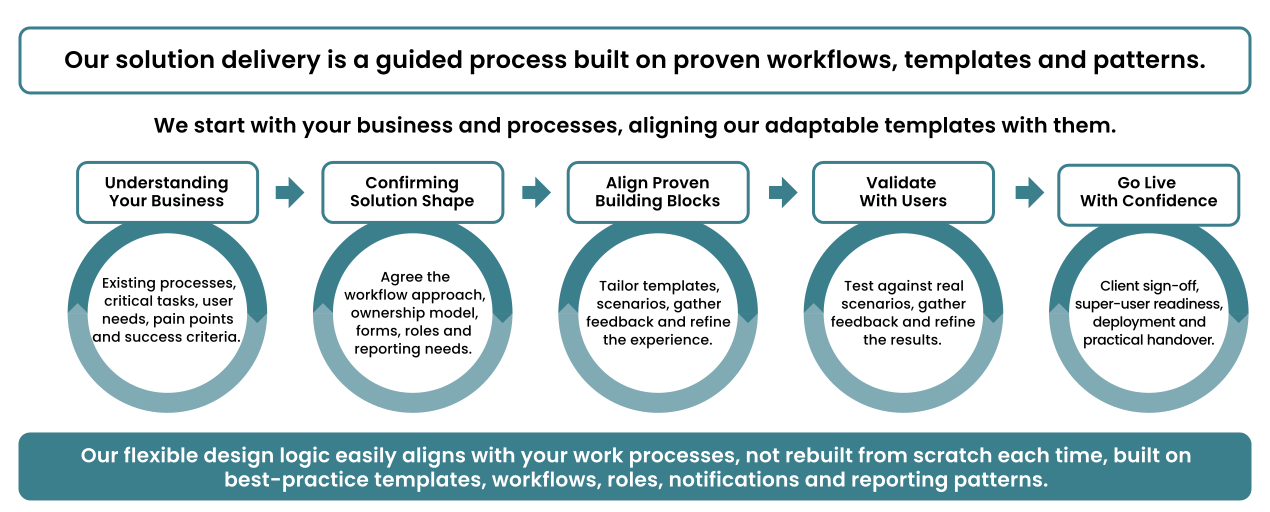
Simple to configure does not always mean simple to work with.
Many platforms promote self-configuration as a way to move quickly and reduce dependency on technical teams. In many situations, that approach works well. If the requirement is to add a question, update a checklist or adjust a simple template, self-service configuration can provide flexibility and speed.
However, operational processes rarely remain simple for long. As organisations grow and processes mature, workflows often need to account for different sites, business units, contractors, approvals, evidence requirements, risk controls and reporting obligations. What initially appeared to be a straightforward workflow can quickly become a critical business process that needs to operate consistently across a complex organisation.
This is where the long-term value of a platform becomes important. The challenge is not simply how quickly a workflow can be configured today, but how effectively it can support the way the business actually operates over time. When exceptions, governance requirements and operational complexity sit outside the system, organisations often find themselves relying on email, spreadsheets, manual follow-up and disconnected workarounds to bridge the gaps.
That is where hidden costs emerge. Processes become harder to manage, visibility decreases and confidence in operational outcomes can be reduced. Unifii is designed to address this challenge by providing the flexibility to configure workflows quickly while ensuring they remain connected to the broader operational, governance and assurance requirements of the business.
Configured forms or connected workflows?
A configured form captures information. A connected workflow manages what happens next. This distinction matters when processes involve safety, risk, contractors, permits, inspections, recurring obligations, approvals, evidence, actions or executive reporting.
Configured forms are not wrong — they are only an element of the process solution.
- Capture information.
- Work well for simple, repeatable capture.
- Are often easy to edit.
- May rely on users knowing what happens next.
- Can create isolated datasets.
- Can push exceptions back to email or spreadsheets.
- May become hard to manage when logic, permissions and reporting become more complex.
- Guide the work.
- Handle standard paths and exception cases.
- Build next steps into the system.
- Connect people, roles, sites, contractors, assets, evidence and actions.
- Preserve data in a reportable structure.
- Support assurance, visibility and follow-through.
- Keep more of the real process inside the system.
Your question should be not only be whether a system can be configured but whether the system keeps working when the process becomes more complex.
Complexity does not have to mean slow.
There is a common assumption that complex workflows result in longer projects, higher costs and greater dependency on the software vendor. With Unifii, that is not the case. Our low-code engine is designed to configure complex workflows quickly, without requiring bespoke software development.
This means your system can reflect the way your business actually works while remaining practical to deliver, support and improve over time.
The difference lies in how the complexity is managed. Rather than asking your teams to manually maintain workflow rules, permissions, exceptions and reporting requirements, Unifii configures these capabilities into the platform from the outset, creating a solution that is tailored to your business without requiring custom software.
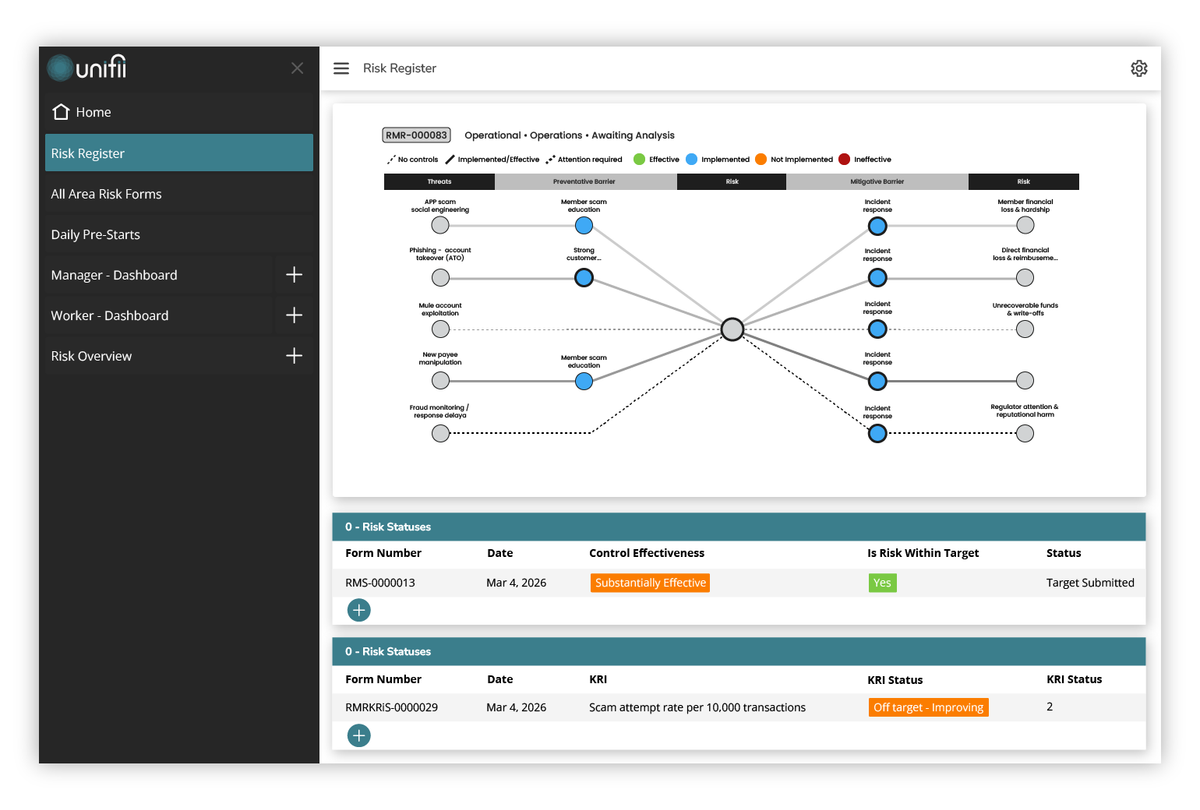
What makes a workflow work in the real world?
Real operational workflows need more than fields on a screen, they need to understand:
- Who is completing the work.
- Where the work is happening.
- Which business unit, site, asset or contractor is involved.
- What role or permission the user has.
- What evidence is required.
- What action should be created.
- Who needs to review or approve the next step.
- What happens when something is overdue.
- How exceptions are handled.
- How related records are linked.
- What data needs to appear in reports.
- What leaders need to see later.
No-code configuration still requires thought. It may remove the writing of code but it does not remove the need to understand how the work should run.
Unifii brings the platform, configuration capability and operational experience together, so the system is not just easy to build. It is easier to operate, support and trust.
Configured around your way of working.
Forget restrictive generic workflows, our platform is designed to be configured around your operating model, including your hierarchy, roles, approval pathways, contractor arrangements, reporting needs and assurance requirements.
For example:
- Conditional logic and show-if behaviour.
- Workflow routing and approvals.
- Role-based access and permissions.
- Site, business unit and asset hierarchy.
- Contractor and third-party participation.
- Linked actions and evidence.
- Escalation pathways.
- Reportable data structures.
- Dashboard and reporting requirements.
- Integrations with other systems.
- Support for ongoing improvement after go-live.
Less internal burden after go-live.
Self-configuration can sound attractive because it appears to give you more control. However that control also creates responsibility. You have to understand the workflow logic, test it and ensure reporting works. Permissions, roles, actions and downstream processes also have to be allocated and checked. In many organisations, those skills are scarce and because system changes are often low-frequency activities, users can quickly forget how the configuration works between changes.
With Unifii that burden reduces, you have a flexible platform, supported by people who understand how the configuration works and how changes may affect the broader system.
That means improvement can continue after go-live without requiring your internal teams to become workflow designers, reporting specialists and system administrators.
Change should be fast, clear and supported.
Operational systems should not stand still. Processes change. Structures change. Reporting needs change. Risks change. The system should be able to move with the business. Unifii supports ongoing improvement through clear support pathways, agreed service expectations and support blocks where needed. That gives clients a practical way to refine workflows, reports and configuration after go-live, without turning every change into a major project. It also helps ensure changes are made properly, tested appropriately and aligned to the way the system is intended to work. The real cost is not configuration. The real cost is rework, workarounds, unreliable reporting and processes that fall apart at the edges.
Built for safety, risk and operational assurance.
Designed for detail-oriented workflows with safety and contractor management, permit to work, control of work, inspections, audits, incident management, hazard reporting, risk controls, recurring HSEQ obligations, asset-related work and operational reporting.
Here workflow is not only capturing information; it is demonstrating that work is assigned, completed, reviewed, evidenced, escalated and followed through. Reflecting the real operating environment, not just the ideal path.
Questions worth asking before choosing a configurable platform
These questions matter because the goal is not just to configure a system.The goal is to create a system people can use, leaders can trust, and the business can keep improving.
Workflows or Configurable forms... do you have questions? Come explore how Unifii works.
You are the only ones who know how your processes works, forms can be more than just information capture, we can integrate them rapidly into powerful and adaptable workflow systems as required.
Is Unifii self-configurable?
Unifii is built on a flexible low-code engine that allows workflows to be configured and changed quickly. Some changes may be simple, but complex operational workflows often need to consider permissions, hierarchy, reporting, related records, evidence and downstream impacts. Unifii helps clients manage that complexity without requiring large internal administration teams.
Does configuration make implementation slower?
Not when the platform is designed for it. Unifii’s low-code engine allows complex workflows to be configured quickly, without bespoke software development. The aim is to deliver change quickly while still aligning the system to the way your organisation actually works.
Why not just use configured forms?
Configured forms can be useful for simple processes. The risk arises when the business needs more than data capture. If the process needs approvals, contractor involvement, evidence, reporting, escalation, linked actions or exception handling, a connected workflow is a much better fit.
How does Unifii reduce internal effort?
Unifii reduces the need for internal teams to maintain deep configuration, reporting and workflow logic expertise. Clients get a system configured around their business, with ongoing support pathways to refine and improve it over time.
How is Unifii different from a form builder?
A form builder helps capture information. Unifii helps manage the work around that information, including roles, permissions, hierarchy, contractors, actions, evidence, reporting and assurance.
Will we need Unifii for every change?
No. The right support model depends on the nature of the change. Simple changes should stay simple. More complex changes should be managed with the right level of support so the workflow, data and reporting remain reliable.