
Incident Management Software for Reporting and Investigation
Incident Reporting You Can Complete And Leaders can Trust.
Connecting incident reporting, investigation, evidence, actions and learning into a single governed workflow.
The incident learning gap: reporting incidents is easy... proving learning is much harder.
Incident management is not just about submitting a form. In complex operations, the real value comes from preserving context, managing the investigation, assigning meaningful actions, verifying follow-through and connecting learning back into risk and operations.
- Reports are submitted, but key context, evidence and classification can be incomplete or inconsistent.
- Investigations start, but deeper records, witness statements and evidence can become fragmented.
- Actions are raised, but closure quality and verification are often difficult to see.
- Lessons are identified, but learning does not always flow back into risk, controls and assurance.
Unifii closes that gap by connecting incident reporting, investigation, evidence, actions, verification and learning in one governed workflow.
One incident can involve many people, records and decisions.
Unifii supports the full incident workflow across frontline reporters, supervisors, HSEQ teams, investigators, action owners and leaders.
Workflow can be configured around roles, privacy needs, approvals, evidence requirements and the way your business manages incident learning.
- Frontline teams reporting clearly where work happens.
- Supervisors reviewing, triaging and assigning early response.
- Investigators preserving evidence and testing causes.
- Action owners closing actions with evidence.
- HSEQ leaders seeing quality, themes and follow-through.
- Operations leaders connecting learning back to risk and controls.
The result is a clearer investigation trail, stronger action follow-through and better data for assurance, reporting and improvement.
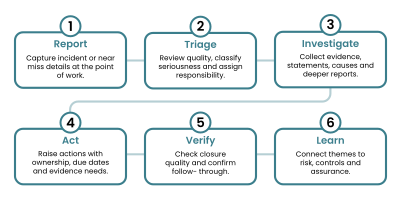
Choose the capability that you need.
Start with reporting. Scale into stronger investigation and learning. Unifii supports incident management as a focused workflow, then connects it to actions, risk, controls, audits, inspections, contractor management and AI-supported insight over time.
Make the first report useful and the next step clear.
Incident reporting and triage are the foundation of a strong incident management process.
If the initial report is difficult to complete, important details can be missed. If triage is inconsistent, you can lose time deciding what needs attention, who should be involved and what happens next.
Unifii allows you to capture incident and near miss reports in a structured workflow, then guide the review, classification, escalation and assignment steps that follow.
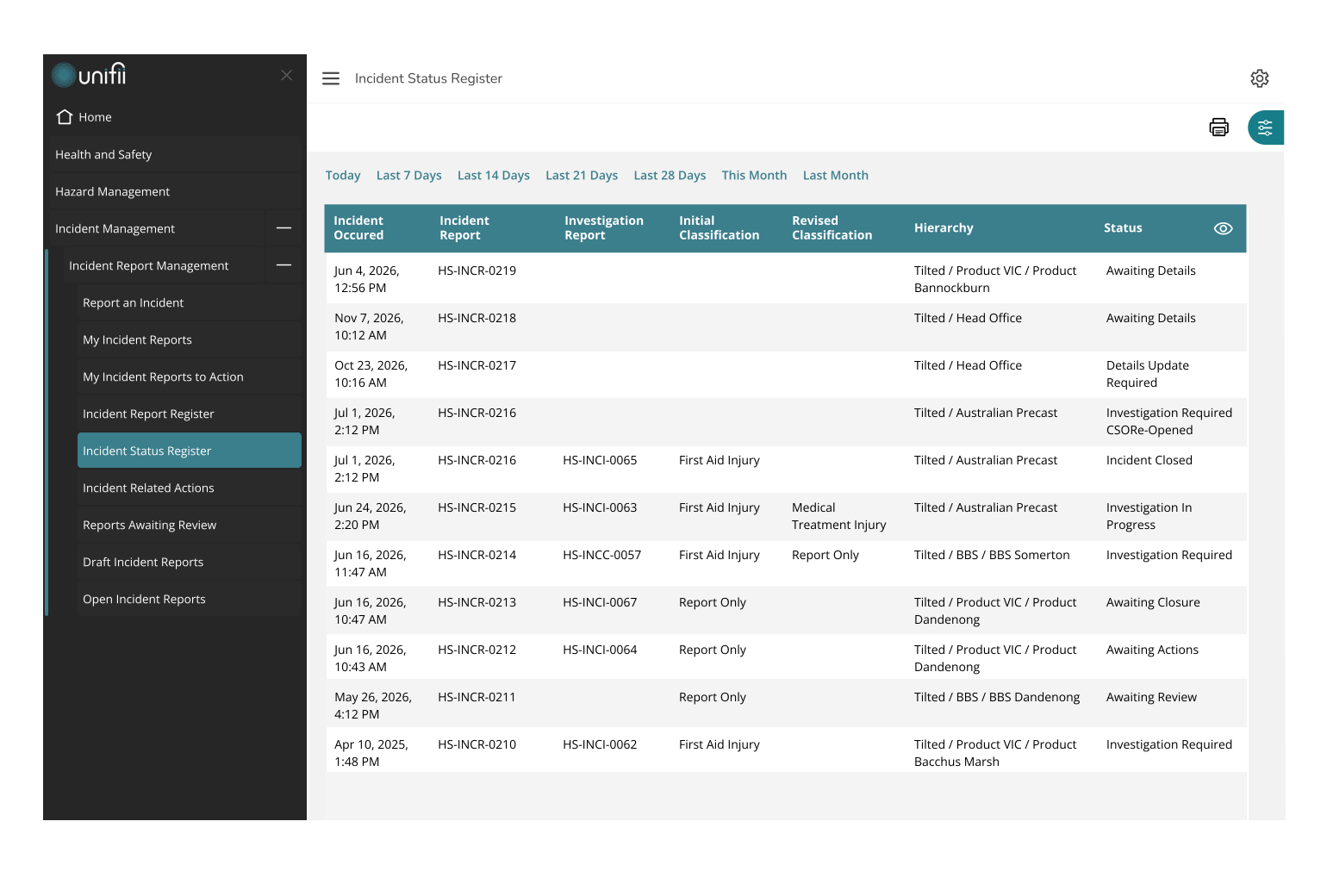
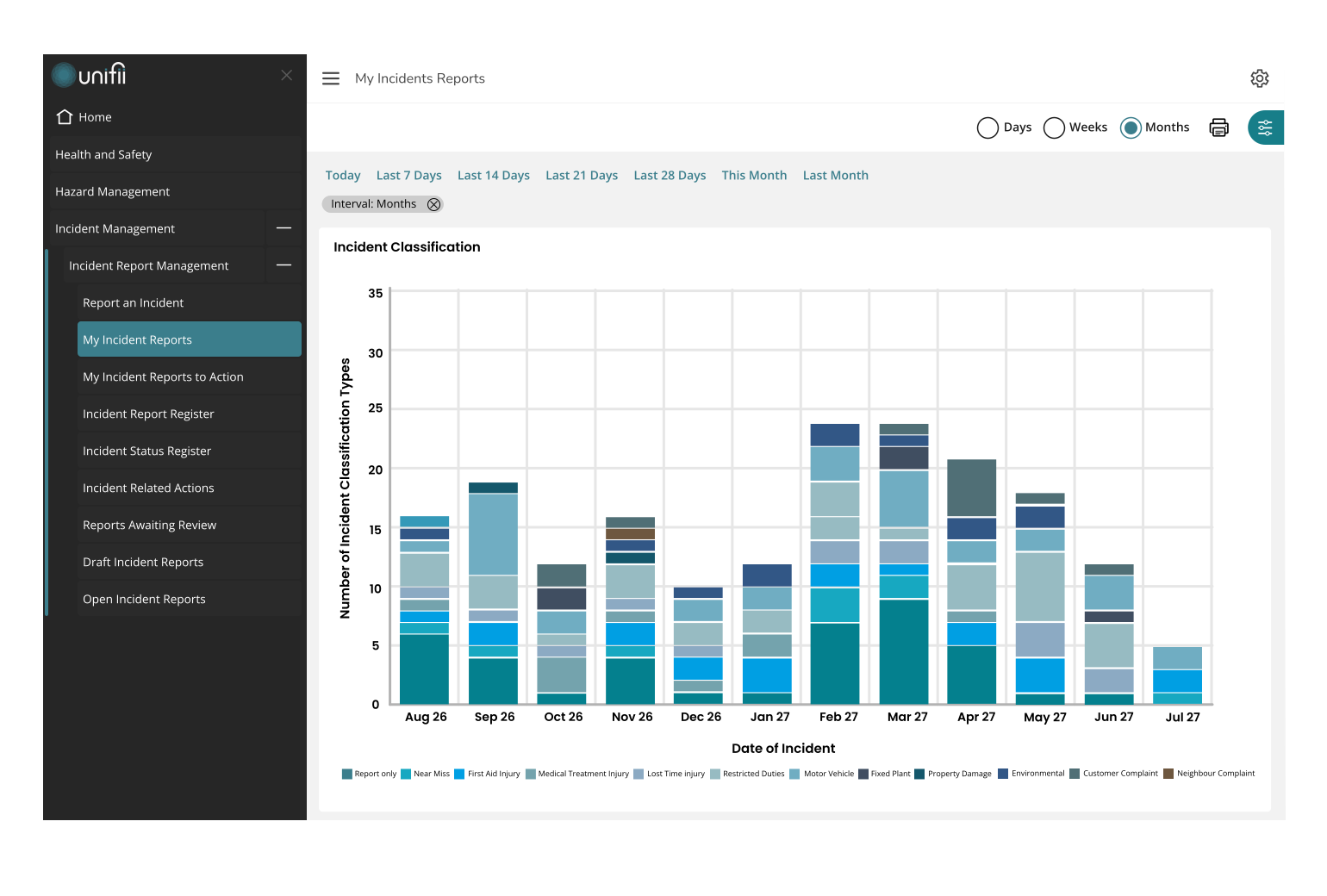
Incident and near miss reporting.
We make it easy to report incidents and near misses where work happens. Configurable forms capture the information you need including:
- Incident and near miss reporting.
- Injury and illness details where relevant.
- Site, area and location capture.
- People, contractor, asset, equipment and vehicle details.
- Photos, attachments and supporting evidence.
- Immediate response and make-safe actions.
- Reporter, supervisor and HSEQ review steps.
- Mobile-friendly reporting for field and frontline teams.
We make reporting practical for the person completing it, while creating enough structure for the business to trust and use the information.
Triage and classification.
Once an incident or near miss is reported, the next step is deciding what it means and what needs to happen next.
Unifii can support triage and classification workflows that help teams review the report, assess seriousness, assign responsibility and trigger the right follow-up steps.
- Supervisor or HSEQ review.
- Incident classification.
- Actual and potential consequence.
- Severity and escalation logic.
- Notifiable incident prompts where required.
- Investigation assignment.
- Action assignment.
- Role-based access and approval steps.
- Notifications and workflow routing.
- Status tracking from report through to closure.
This helps organisations move from submitted reports to controlled response, clearer accountability and stronger investigation quality.
AI supports people. It does not approve work, make final decisions or replace human judgement.
What good incident data needs to carry.
A submitted report is only the beginning. For incident data to support learning, assurance and better decisions, it needs to preserve the context around what happened and what changed afterwards.
- Site, area and location.
- People involved.
- Assets, equipment and vehicles.
- Contractors and third parties.
- Evidence, photos and attachments.
- Classification, consequence and potential consequence.
- Causes and contributing factors.
- Investigation notes and supporting records.
- Corrective actions, owners and due dates.
- Verification and closure evidence.
- Links to risks, controls, audits, inspections and recurring themes.
Turning incident reporting into usable operational evidence.
Support deeper incident components without losing control of privacy, access or evidence.
Some incidents require more than a single investigation record. We support specific investigation tools with role-based access, digital signatures, version control, attachments and approval workflows where required.
Unifii AI supports better incident quality. People stay in control.
Unifii AI improves the quality and speed of incident learning when it is built on structured operational data with context, relationships, evidence and ownership.
Incident management needs to work across the real operating environment.
Unifii incident management is suited to environments where incidents, near misses, investigations and actions need to be managed across sites, teams, contractors, assets, vehicles and operating locations.
That includes mining and resources, manufacturing and heavy industry, transport and logistics, property, construction and facilities, utilities, infrastructure, essential services, retail and distributed operations, and government or public sector environments.
In these environments, incident management is not only about recording what happened. It is about understanding what changed, what failed, what was controlled, what needs to improve and whether the organisation has learned enough to reduce the chance of recurrence.
Improve incident reporting, investigation and learning.
Contactus to find out more about our product and or for a personal demonstration on how we can help your business.