
High Risk Control of Work | Case Study
Control of Work at Scale.
How a large distributed organisation connected contractor competency, work requests, risk assessment, permits and site access.
This is an anonymised case study of one of our clients.
A large organisation operating across hundreds of locations faced a familiar but critical problem. Contractor work was frequent, varied in risk, and often performed outside standard business hours. While processes existed, they were not consistently applied and more importantly, they could not be demonstrated with confidence.
A serious near-miss event exposed this gap. Leadership could not clearly verify whether all required controls had been followed, nor provide a complete, auditable record of what had occurred. The concern was not isolated to one incident. It raised a broader question: could the organisation prove it was in control of contractor work at scale?
Fragmented operational and governance risk.
Contractor management relied on a mix of paper permits, local sign-in books, spreadsheets, and informal communication. Each site operated slightly differently, creating variability in how work was planned, authorised, and executed.
This fragmentation reduced visibility and introduced operational friction. Store teams were often unaware of planned work until contractors arrived, while central teams spent time manually reconciling information across systems. Without a single source of truth, it was difficult to distinguish between work that was properly governed and work that had bypassed key controls.
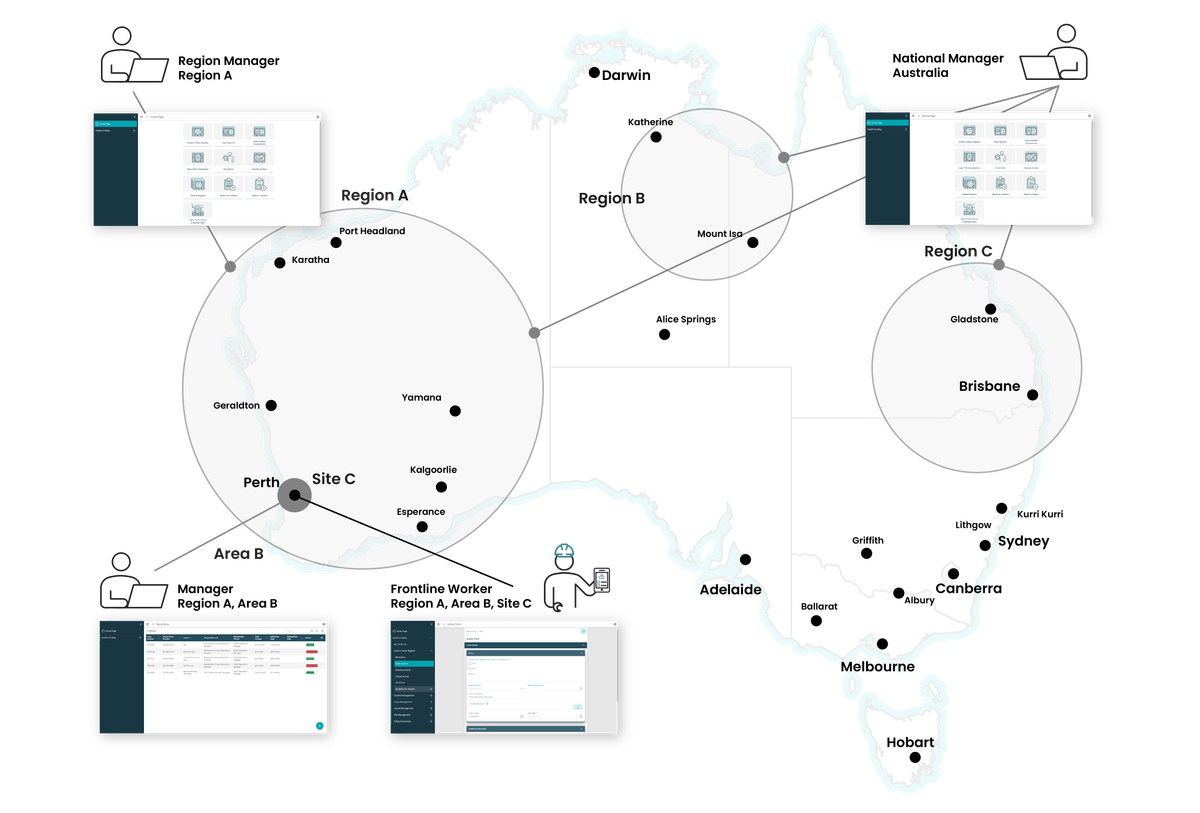

One clear objective: A single system, full visibility.
With the client we defined a simple but demanding objective: create a single, end-to-end system that would manage all contractor work in one place. Every job needed to be visible, risk assessed, authorised, and supported by evidence.
This was not positioned as achieving perfection in every instance. It was about removing the structural weaknesses that allowed work to occur outside defined processes and creating a system that made the correct way of working the easiest way to operate.
Creating a connected control-of-work model.
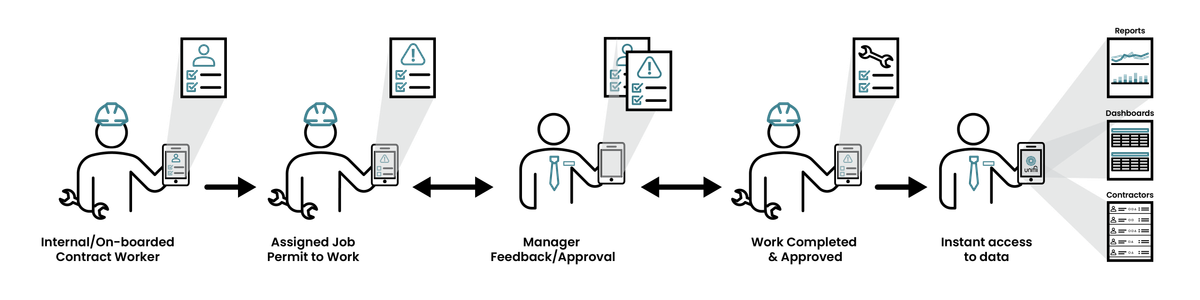
With the client we defined a fully integrated control-of-work system that brought together contractor onboarding, inductions, work authorisations, permits to work, and site access into a single workflow.
The keystone of this was workflow authorisation the mandatory starting point for every job. This ensured a clear decision trail for how that work would be managed. Where high-risk activities were identified, permits were required and enforced before work could proceed. Digital sign-in and sign-out replaced paper-based processes, creating a real-time onsite record. Licences, inductions, and Safe Work Method Statements were captured and linked directly to each job, removing the need for separate record-keeping.
Designed for real operational conditions.
Contractors were able to engage with the process using their own devices, and site teams a simple way to review and approve work without additional administrative burden.
Our solution introduced a field-ready approach that allowed contractors to access requirements, complete permits, and sign in on arrival, while still ensuring that all controls were applied. Flexibility was also built in for lower-risk work, enabling simplified pathways that maintained governance without creating unnecessary friction.
Adoption driven by clarity and usability.
Successful implementation relied on both system design and organisational alignment. Leadership made it clear that using the system was a requirement for all contractor work, including external vendors.
At the same time, ongoing feedback from users was used to refine workflows and remove friction. This ensured that the system supported how work was actually done, rather than forcing teams into impractical processes. As a result, adoption extended beyond the initial use case and became embedded across the organisation.
Real-time visibility and scalable control.
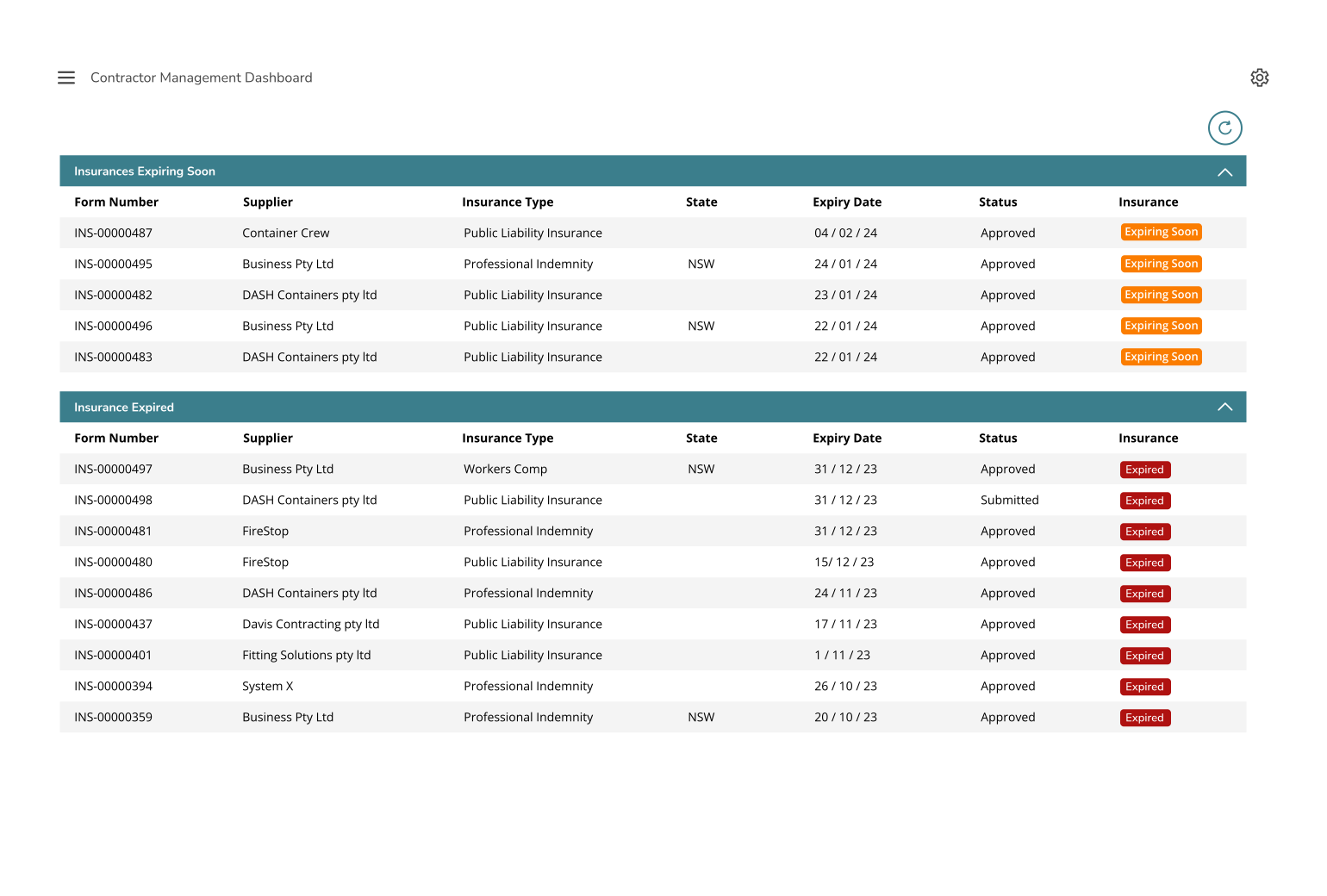
With all contractor activity flowing through a single platform, the organisation gained real-time visibility of work across its entire network. Leaders could see what was planned, what was in progress, who was on site, and where actions were required.
The system supported high volumes of work across hundreds of locations, maintaining consistent governance without reliance on manual processes. This demonstrated that control of work could be both rigorous and scalable when supported by the right system.
Outcomes: Demonstrable control and improvement.
The organisation moved from a position of uncertainty to one where contractor work was consistently governed, visible, and evidenced. Every job followed a defined pathway, and every step contributed to an auditable record that could support compliance and assurance.
Operationally, this improved coordination, reduced administrative effort, and minimised unexpected disruptions at sites. From a governance perspective, it enabled the organisation to demonstrate control with confidence and use real-time information to continuously improve how contractor work was managed.
Talk to Us about Control of Work.
We can improve coordination, reduce administrative effort, and minimise unexpected disruptions at sites. We allow you to demonstrate control with confidence and use real-time information to continuously improve how work is managed.