
HSEQ Operational Safety Management | Case Study
Turning a Safety System Into Operational Discipline.
How a distributed organisation aligned recurring safety activity, accountability and evidence across its operations.
The operating challenge.
A distributed organisation had well-defined safety and quality requirements, but completing the required work consistently across its operations remained difficult.
Recurring activities existed across numerous sites and operating areas, but they were managed through a combination of paper, local processes and manual follow-up. The central HSEQ team spent considerable time chasing incomplete work, collecting evidence and rebuilding an overall view of performance.
The issue was not merely task scheduling. The organisation needed to know what had to happen, when it was due, who was accountable, what evidence was required and where activity was beginning to drift.
Why it was difficult.
A documented management system does not automatically create operational discipline.
Across a distributed business, requirements can be interpreted differently, completion can be assumed rather than demonstrated, and gaps may only become visible during an audit, incident investigation or monthly reporting cycle.
The safety team needed a way to make expectations practical for frontline leaders without creating an administrative burden that discouraged adoption.
What Unifii had to understand.
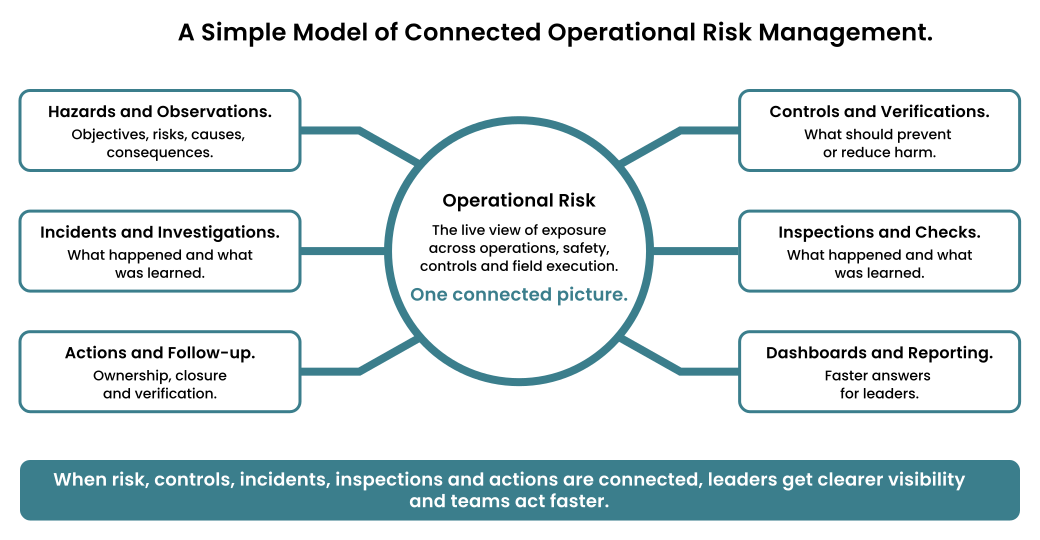
We worked closely with the organisation to understand its hierarchy, site structure, operating roles and recurring HSEQ requirements.
This meant translating management-system obligations into work that made sense in the operating environment: activities assigned to the right people, at the right locations, at the right time, with clear evidence expectations and visible accountability.

How the solution was aligned.
Unifii aligned the HSEQ Planner and related workflows to the organisation’s structure and operating requirements.
Recurring safety and quality activities became scheduled, owned and evidence-backed. Leaders could see what had been completed, what was late, what had been missed and where intervention was required. The system also connected activities to the relevant controlled documents and supporting records, providing a clearer basis for assurance.
The result was an honest view of execution rather than a paper-based assumption that the work was occurring.
What changed.
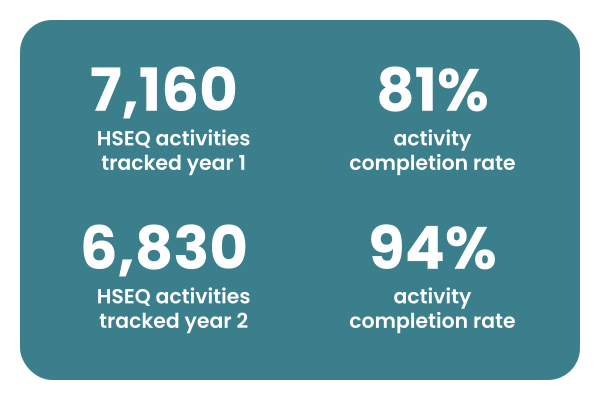
In the first year, the organisation gained visibility of 7,160 scheduled activities, with an 81 per cent completion rate. This exposed work that had previously been difficult to see and created a clear improvement focus.
In the following year 6,830 scheduled activities achieved a 96 per cent completion rate.
Just as importantly, the role of the central HSEQ team changed. Instead of spending most of its time chasing information and incomplete tasks, it could focus more of its effort on coaching, improvement and the sites requiring support.
What this case proves.
Unifii can help complex organisations restore confidence in operational reporting by aligning frontline participation, accountability, evidence and leadership visibility in one connected environment.
Trusted board reporting begins with how operational information is captured, owned and connected at the frontline.
To find out more contact us today:
Unifii can help you with risk and safety management, control of work and compliance management, call us on 1800 UNIFII (1800 864 344) in Australia or +61 2 9913 4100 internationally. Or click below to send us a message and we'll get back to you immediately.