
High Risk Control of Work | Case Study
Control of Work at Scale.
How a large distributed organisation connected contractor competency, work requests, risk assessment, permits and site access.
The operating challenge.
An operational incident exposed a difficulty that many distributed organisations face: the business could not readily demonstrate whether contractor workers held the licences and competencies required for the work they were undertaking.
That issue revealed a much broader challenge. Contractor records, site access, work requests, risk assessments, permits and work completion were managed through separate processes. The organisation needed a reliable way to understand what work was being requested, who would perform it, whether they were competent and authorised, what controls were required and whether the work had been properly closed out.
Why it was difficult.
A documented management system does not automatically create operational discipline.
Across a distributed business, requirements can be interpreted differently, completion can be assumed rather than demonstrated, and gaps may only become visible during an audit, incident investigation or monthly reporting cycle.
The safety team needed a way to make expectations practical for frontline leaders without creating an administrative burden that discouraged adoption.
What Unifii had to understand.
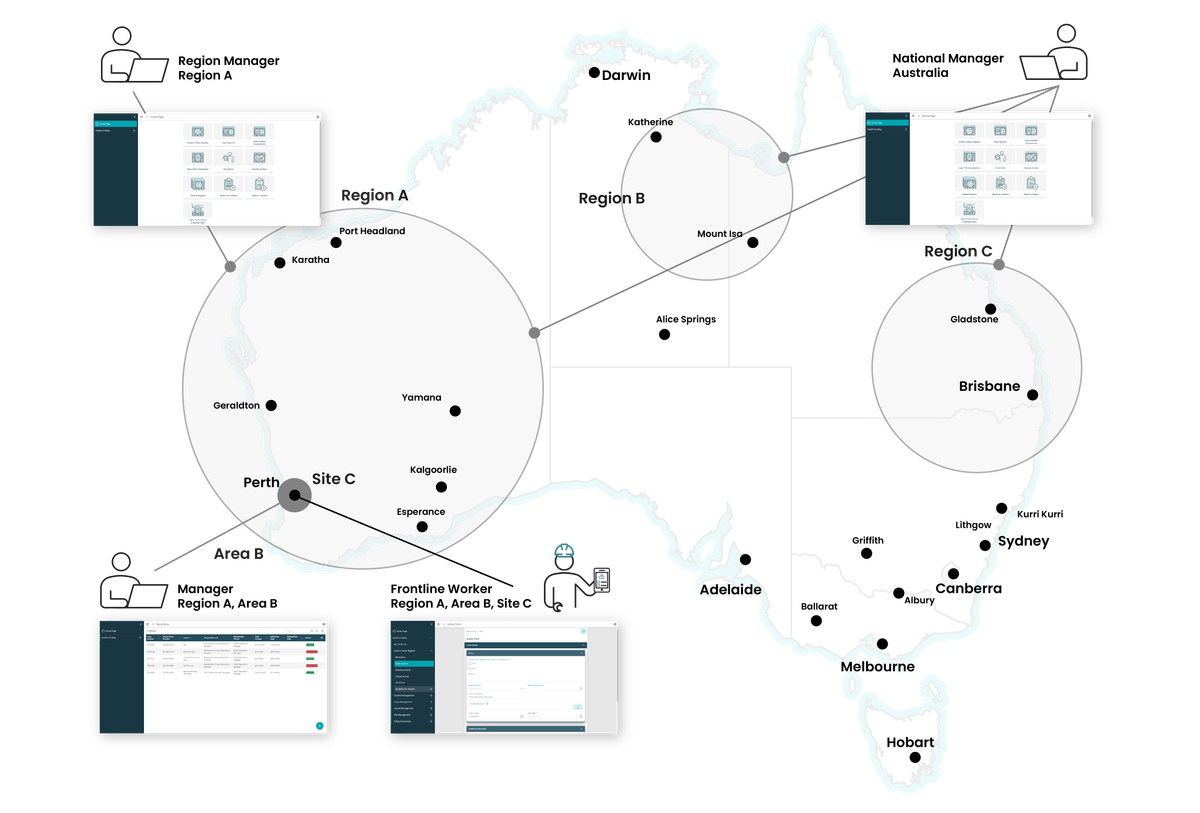
Unifii worked to understand the full life of contractor work: vendor onboarding, licences and competency, inductions, work requests, site-specific requirements, risk assessment, Permit to Work, authorisation, sign-in and sign-out, and completion evidence.
It also needed to understand the balance between enterprise governance and site practicality. The solution had to create consistent control without placing the full administrative burden on individual locations.
How the solution was aligned.
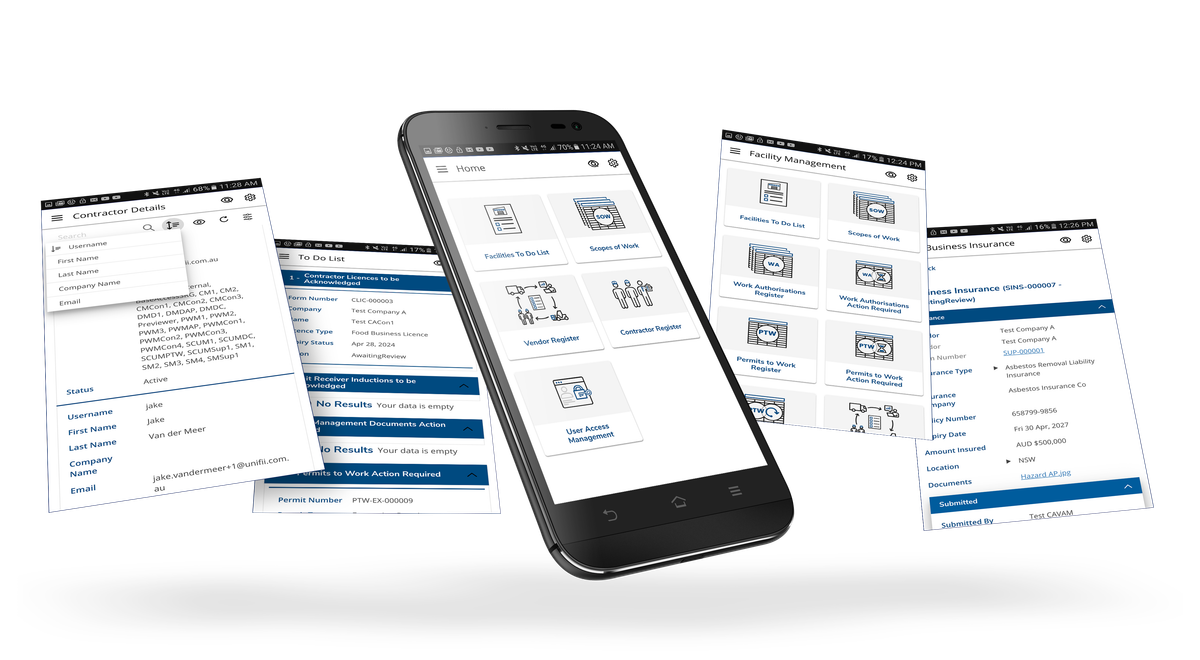
Unifii brought Contractor Management, Work Requests, Sign-in and Sign-out, Risk Assessment and Permit to Work into one connected Control of Work process.
Contractors and vendors could be managed through the same operating environment as employees and site teams. Relevant licences, competencies, inductions and documentation were visible before work progressed. The workflow guided the right approvals, risk controls and permits for the task, while mobile sign-in and sign-out improved visibility of who was on site and when.
This created a practical chain of accountability from the initial request through to completion and close-out.
What changed.
The organisation established a more consistent governance model across a large, distributed network, managing thousands of contractors and vendors and approximately 17,000 work requests and authorisations.
Site teams gained a clearer, more practical process for managing contractor activity. Leaders gained stronger visibility over contractor competency, work status, authorisation and control evidence, without relying on separate registers and disconnected local processes.
The solution also addressed a problem much broader than the original request: not simply how to hold contractor records, but how to govern the work they perform.
Talk to Us about Control of Work.
We can improve coordination, reduce administrative effort, and minimise unexpected disruptions at sites. We allow you to demonstrate control with confidence and use real-time information to continuously improve how work is managed.