
Safety Reporting | Case Study
Turning fragmented safety information into trusted assurance.
How a complex organisation created stronger participation, consistent reporting and a more reliable line of sight from operational activity to leadership.
The operating challenge.
A large, complex organisation needed greater confidence in the safety information being presented to senior leadership and the board.
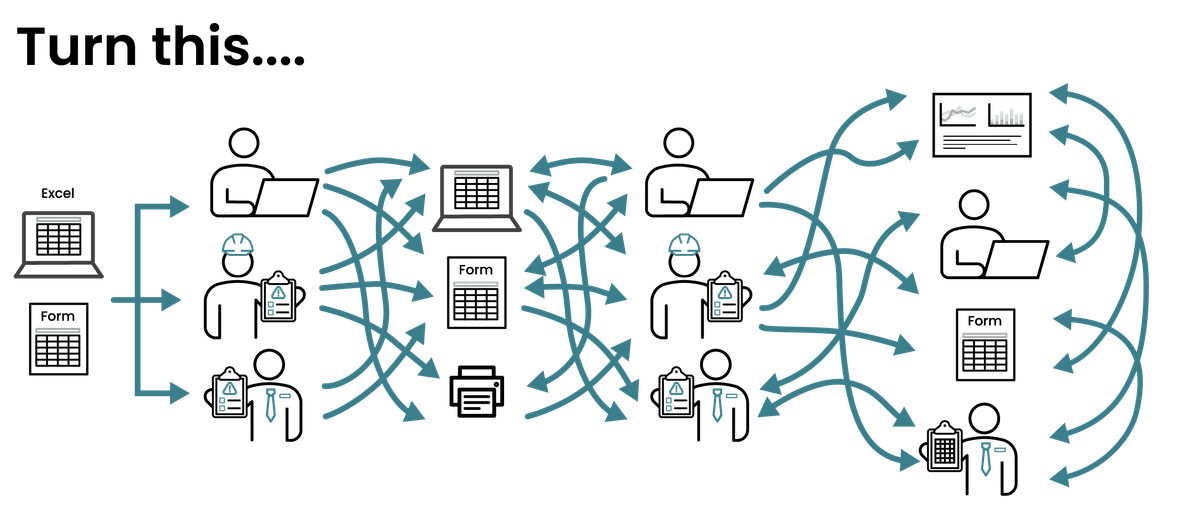
Information existed, but it was fragmented across business areas, processes and systems. Participation was inconsistent. Safety teams spent significant effort consolidating information into reports, yet the final view could not easily show the operational context behind the numbers: what had occurred, where, what action had followed and whether the underlying issue was being addressed.
The organisation did not simply need a better report. It needed a more reliable basis for assurance.
Why it was difficult.
Reporting integrity could not be fixed at month end.
The organisation operated across multiple divisions, locations and operational roles, each with different responsibilities and ways of working. Safety information needed to be useful to people doing the work, while also creating a coherent view for managers, executives and the board.
A centralised reporting solution alone would have repeated the problem. Unless operational activity, ownership, evidence and follow-up actions were captured consistently at the point of work, leadership would still be relying on information reconstructed after the fact.
What Unifii had to understand.
Unifii worked to understand the organisation's hierarchy, role structure, safety and risk processes, reporting requirements and the different information needs of frontline teams and senior leaders.
That included how incidents, hazards, safety interactions, inspections, injury management and actions were managed; who needed to participate; what evidence was required; and how information should roll up through the organisation without losing its operational meaning.
How the solution was aligned.
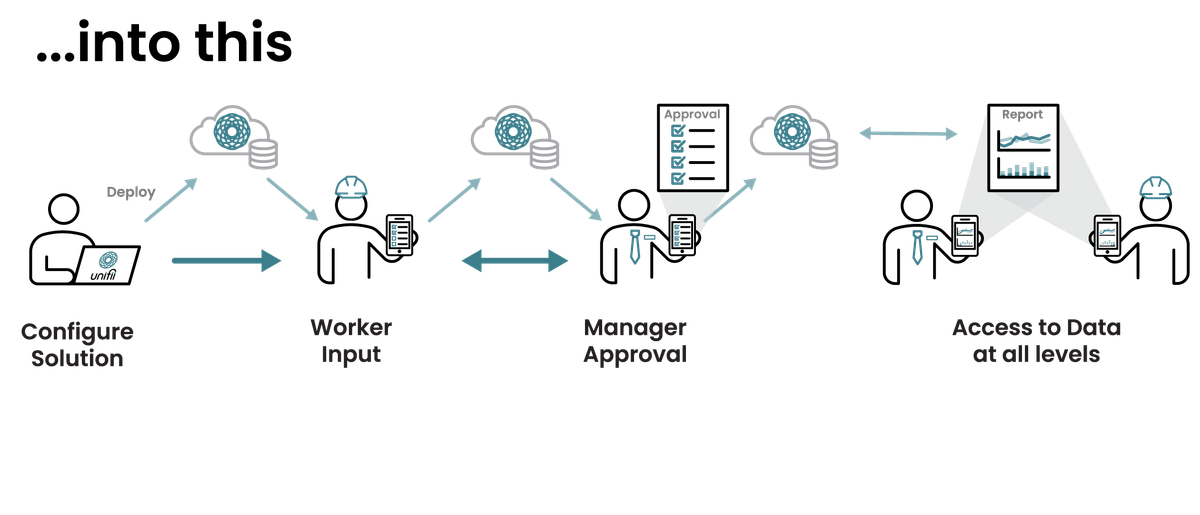
Unifii created a connected operating environment aligned to the organisation's own structure and responsibilities.
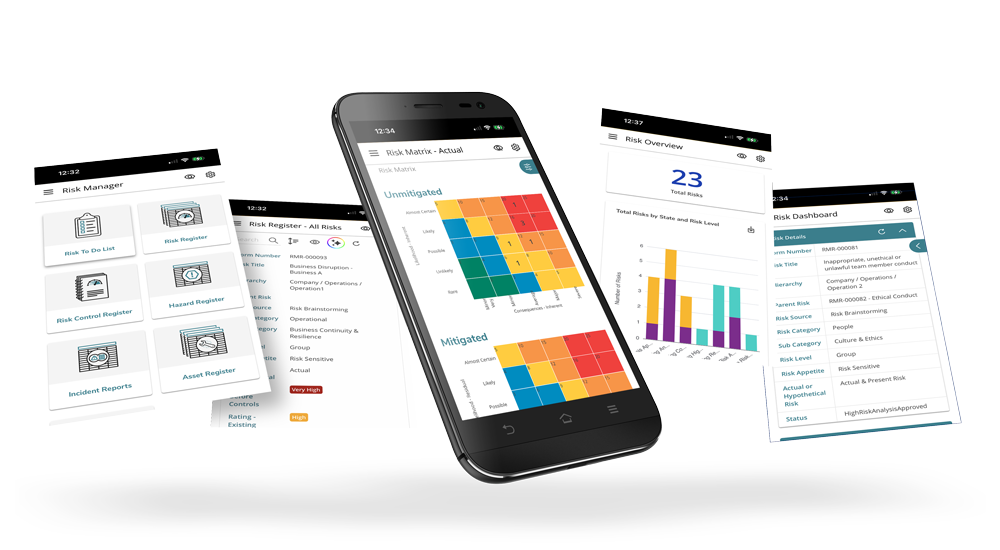
Operational activity was captured through practical workflows that made ownership, follow-up and evidence visible. Information could then be reported live across divisions, departments, locations and operational areas, rather than being manually assembled from disconnected sources.
Leaders could move from the summary into the context beneath it: the record, evidence, action status and operating area behind the reported information. AI-supported reporting and analysis also made it easier to interpret operational information, identify patterns and focus attention where it was most needed.
What changed.
The organisation established a more reliable line of sight from frontline activity to executive assurance.
Participation and ownership improved because people could work within a system aligned to their responsibilities. Safety teams were less dependent on rebuilding reports manually, while leaders gained more timely visibility of actions, injury-management activity and the operating context behind reported results.
The result was not simply a more polished board report. It was a stronger governance foundation grounded in the work actually taking place.
What this case proves.
Unifii can help complex organisations restore confidence in operational reporting by aligning frontline participation, accountability, evidence and leadership visibility in one connected environment.
Trusted board reporting begins with how operational information is captured, owned and connected at the frontline.
Talk to Us about Safety Reporting.
We can help you build a more reliable line of sight from frontline activity to executive assurance, with connected workflows, live reporting and AI-supported analysis.